
Have you ever wondered why some projects follow their plan smoothly while others stumble despite careful planning?
Why do we sometimes miss crucial deadlines even when we start early?
The answer might lie in something as simple as the direction of our planning.
Let me share a daily struggle first.
Every evening, we try to get our kid to bed by 9 PM. And every evening, we fail - sometimes by 15 minutes, sometimes by an hour. More on this later, but first, let's understand what planning direction means.
Think about cooking dinner versus catching a flight.
When cooking, you naturally start with gathering ingredients, then move to preparation, cooking time, and plating - each step building on the previous one. It's a natural progression where you can adjust and taste as you go along.
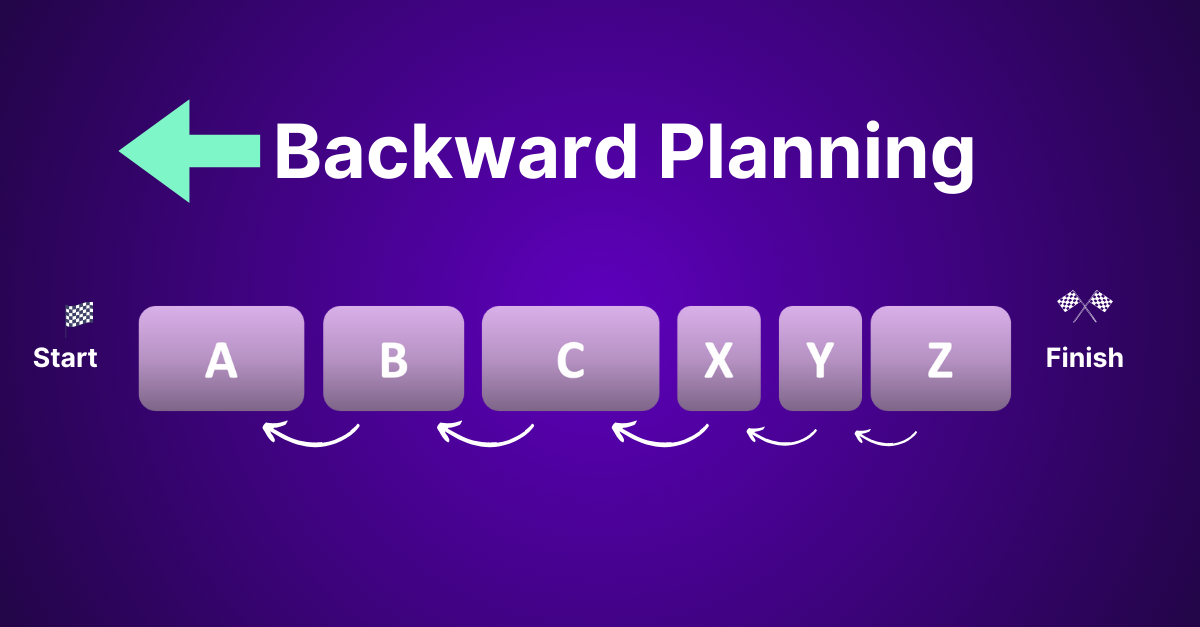
When catching a flight, however, you work backwards: boarding time is 2:30 PM, so you need to be at the gate by 2 PM, which means clearing security by 1:30 PM, arriving at the airport by 1 PM, leaving home at noon considering traffic, and therefore calling a taxi by 11:45 AM.
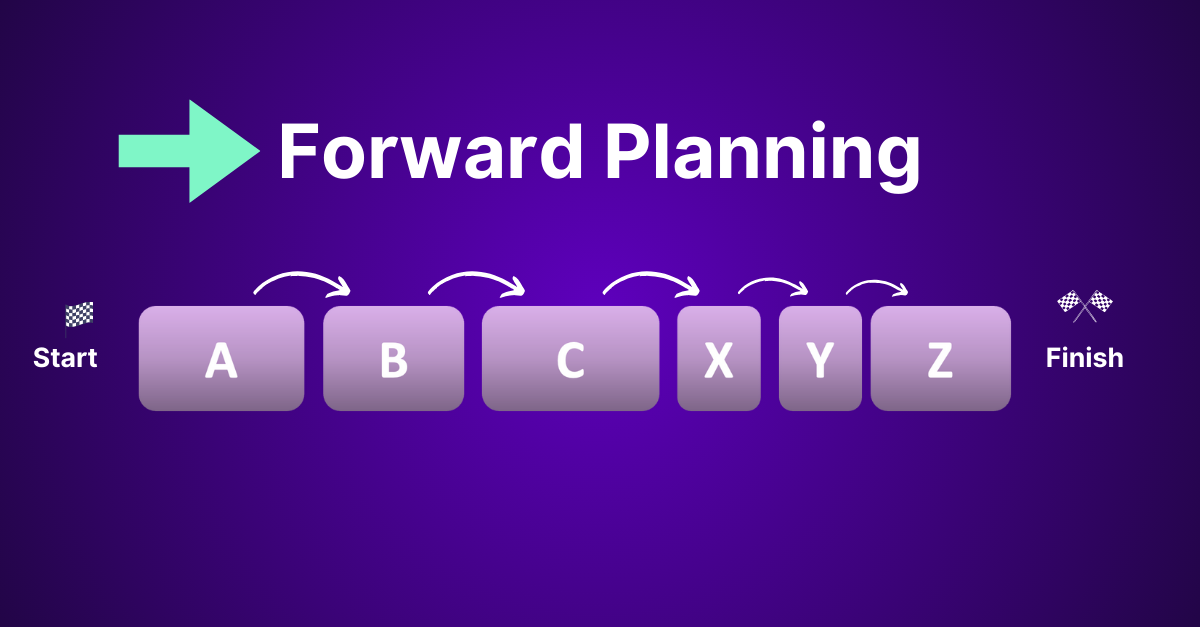
One approach builds forward, starting chronologically from first step to last step.
The other approach calculates backward from the final point to the previous one, until arriving at the first step.
In project management, both approaches have their place.
Tip #1: Be Aware of Which Situations Call for Forward or Backward Planning
Forward planning works well when building something new or exploring possibilities - think product development where you start with initial research, move to prototyping, then testing, and finally production. Your focus naturally goes to the first step, what you would need to start with.
Backward planning, on the other hand, shines with fixed deadlines and clear end states - like event planning, where you start with the event date and work backwards through venue booking, speaker confirmation, and marketing campaigns. In such cases, your focus would naturally stay on the last step.
Each type of project naturally leans toward one approach, though they often benefit from both. A skilled PM needs to understand when and how to apply each approach.
When to Use Forward Planning:
• Well-defined projects with clear starting points
• When the path is relatively clear and sequential
• More intuitive for team execution
• Commonly used in process improvement initiatives
• Ideal for research and development projects
• When flexibility and discovery are key elements
When to Use Backward Planning:
• Projects with fixed deadlines
• Complex outcomes where dependencies are crucial
• When end state is clearly defined
• Helps identify critical path early
• Puts emphasis on accurate duration estimates
• Perfect for event planning, regulatory projects and Olympic games
Tip #2: Beware of the Risks of Focusing on Only One Approach
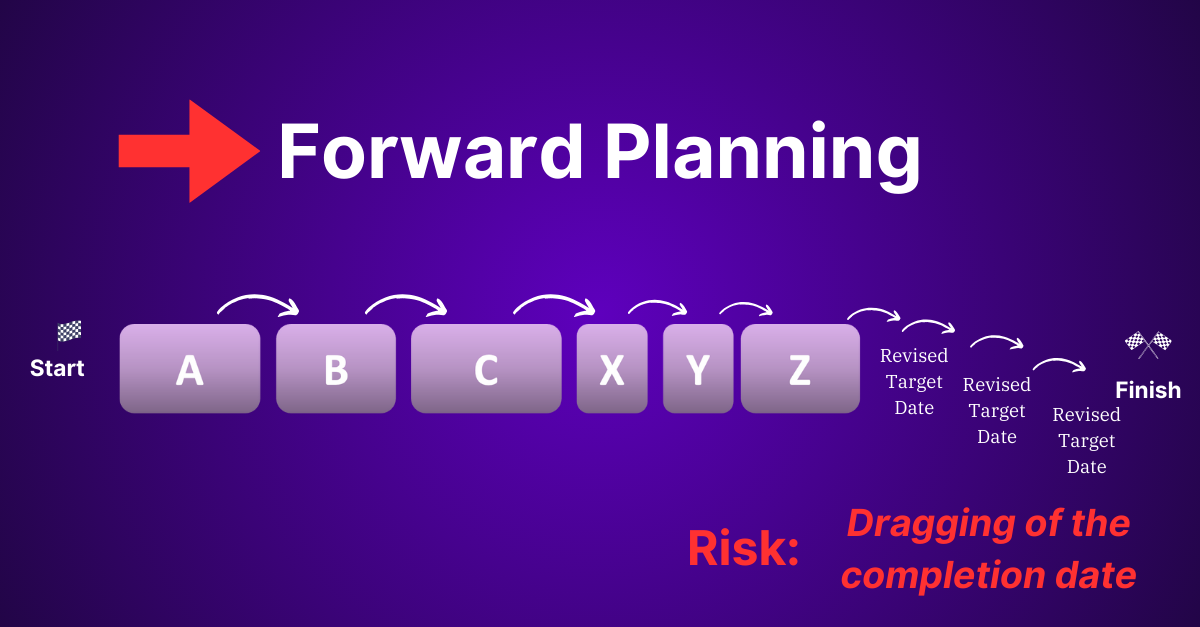
Using only forward planning might lead to a continuous dragging of the final project date. Each time you have a delay on a step, this will cause a revision of the final date. Then, if the same happens on one of the next steps, you will need to push again. And again. And again. The effect on the team morale and on the stakeholders looking at you will not be great. Trust me, I've been there many times.
Conversely, forcing only backward planning might lead to inflating pressure and deadline stress. Knowing that the final date is the most important thing, teams will get increased pressure each day as they approach the end. Delays need to be compensated, extra effort is constantly required by the team. Extra hours. Extra stress.
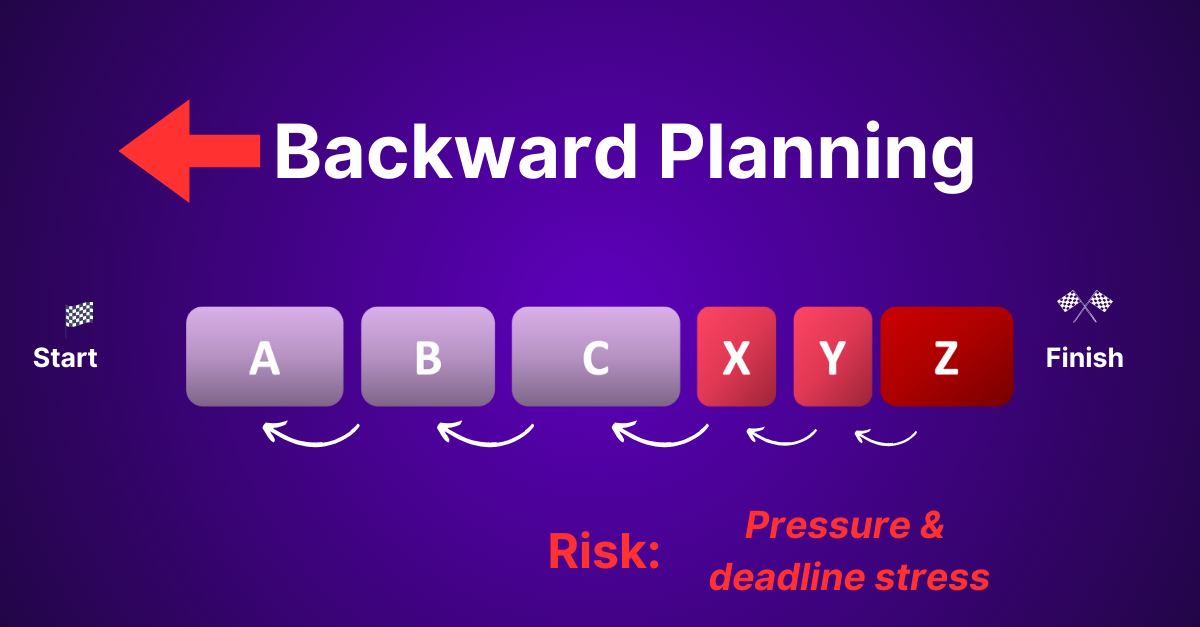
Such planning missteps often have an unpleasant impact on the reputation of the Project Manager and their capabilities.
Tip #3: Don't Limit Yourself to One Planning Direction
Master the art of combining both, especially when facing complex projects. The most effective approach is often a strategic combination: use backward planning for your high-level, strategic framework (major milestones, key deliverables, critical deadlines) and then switch to forward planning for the detailed, operational execution steps. This two-tier approach ensures you don't miss critical deadlines while maintaining flexibility in how you execute the details.
Back to Our Bedtime Story
We were setting a deadline (9 PM) but doing only backward planning (ambitious parents!). Once we actually mapped it FORWARD - dinner prep, eating, bath time, teeth brushing, pajamas, bedtime story - we realized that our realistic target should be 9:30! And if we wanted to go back to 9:00, well yes, we would need to start half an hour earlier with everything… and cut from the fun games. 🤔
Well, maybe 9:30 is not that late 😉